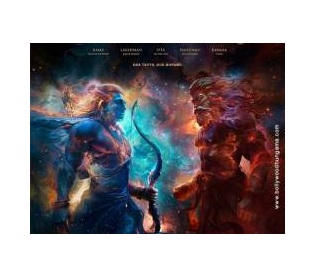
Disclaimer:
This article is intended for informational and entertainment purposes only. The Ramayana is a revered epic in Indian culture, and all efforts have been made to present its story, characters, and related film details with respect and accuracy. Any opinions expressed are those of the writer and not intended to offend religious or cultural sentiments. Details about the upcoming movie, including cast, crew, budget, and release dates, are based on publicly available information and may be subject to change by the filmmakers. Readers are encouraged to verify updates from official sources.
1. Introduction – An Epic for the Ages
Few stories in human history have endured for millennia, resonating across cultures, languages, and borders. The Ramayana, one of India’s two great epics alongside the Mahabharata, has been retold countless times—in Sanskrit verses, folk songs, shadow plays, television series, animated films, and stage performances. Now, it is set to be re-imagined as a high-budget cinematic spectacle by acclaimed filmmaker Nitesh Tiwari.
This adaptation promises to bring the grandeur of Valmiki’s immortal tale to life with cutting-edge technology, an ensemble cast, and a scale that rivals the biggest Hollywood blockbusters. More than just a movie, it is positioned as a cultural event, designed to resonate with audiences both in India and across the world.
2. Understanding the Ramayana – A Brief Background
The Ramayana, traditionally attributed to sage Valmiki, is an epic poem of over 24,000 verses. It narrates the life of Lord Ram, prince of Ayodhya, and his quest to rescue his wife, Sita, from the demon king Ravana of Lanka. Alongside heroism, the epic explores themes of duty (dharma), righteousness, loyalty, sacrifice, and the eternal struggle between good and evil.
The tale is divided into several key chapters (Kandas):
- Bala Kanda – The childhood and early life of Ram.
- Ayodhya Kanda – His exile from Ayodhya.
- Aranya Kanda – Life in the forest and Sita’s abduction.
- Kishkindha Kanda – Alliance with the monkey king Sugriva.
- Sundara Kanda – Hanuman’s heroic leap to Lanka.
- Yuddha Kanda – The battle between Ram and Ravana.
- Uttara Kanda – The later life of Ram, Sita’s trial, and her return to Mother Earth.
Its influence extends beyond India, inspiring adaptations in Thailand (Ramakien), Cambodia, Indonesia, and other Southeast Asian cultures.
3. The Vision Behind the New Film
Director Nitesh Tiwari, known for the blockbuster Dangal (2016), has expressed that his goal is not just to make a visually appealing film, but to honor the essence of the Ramayana. The project aims to balance authenticity with innovation—retaining the soul of the epic while using the latest filmmaking tools to enhance the experience.
Key Elements of the Vision:
- Cultural Authenticity: Staying faithful to the spirit of the original text.
- Universal Appeal: Making the story accessible to audiences worldwide, even those unfamiliar with Indian mythology.
- Technological Excellence: Using world-class visual effects to recreate mythical settings like Ayodhya, Lanka, and the Vanara kingdom.
4. The Cast – Modern Faces for Timeless Characters
The casting process has been meticulous, with each role chosen to match both the physical and emotional requirements of the characters.
- Ranbir Kapoor as Lord Ram – Known for his versatility, Kapoor brings a mix of gravitas and vulnerability to the role.
- Sai Pallavi as Sita – Her natural grace and expressive acting make her a strong choice for portraying devotion and strength.
- Yash as Ravana – The KGF star embodies both the charisma and menace of the ten-headed demon king.
- Ravi Dubey as Lakshman – Loyal and fierce, Lakshman is portrayed as more than just a supporting figure.
- Sunny Deol as Hanuman – Deol’s powerful screen presence aims to capture Hanuman’s unwavering devotion and strength.
- Arun Govil as King Dasaratha – A nostalgic casting, as Govil famously portrayed Ram in the 1980s television series.
5. Production Scale and Technology
This Ramayana adaptation is being developed as a two-part epic with a reported budget of around ₹4,000 crore (approx. US $500 million), making it the most expensive Indian film ever.
Technological Highlights:
- IMAX Filming: To create a grand, immersive viewing experience.
- High-End VFX: Handled by global leaders like DNEG and ReDefine, known for Hollywood productions.
- Authentic Sets: Extensive set design to replicate ancient palaces, forests, and battlefields.
The filmmakers are also collaborating with international stunt coordinators and cinematographers to ensure action sequences and visual storytelling meet global standards.
6. Music – A Spiritual and Cinematic Blend
Music is an integral part of the Ramayana’s emotional impact. This adaptation’s soundtrack is a unique collaboration between A.R. Rahman, India’s most celebrated composer, and Hans Zimmer, the Hollywood legend behind scores like Gladiator and Inception.
The music is expected to blend Indian classical ragas with orchestral grandeur, creating an atmosphere that is both divine and cinematic.
7. Storytelling Approach – Faithful Yet Fresh
The film will follow the central storyline of the epic but is expected to deepen character arcs and explore emotional subtleties.
Key storytelling choices:
- Two-Part Release: The first film will cover the events up to Sita’s abduction, ending on a dramatic cliffhanger. The second will focus on the war and Ram’s return.
- Parallel Narratives: Ravana’s perspective will receive more screen time, highlighting his complexity.
- Humanized Portrayals: Characters will be layered, showing both strengths and vulnerabilities.
8. Global Ambitions and Cultural Diplomacy
While deeply rooted in Indian culture, the film is positioned as a global cinematic event. Marketing strategies include:
- International Premieres: Plans for launches in the U.S., U.K., and Southeast Asia.
- Multilingual Releases: Dubbed and subtitled in multiple languages, including Spanish, French, and Japanese.
- Cultural Showcases: Tie-in exhibitions showcasing Indian art, costumes, and mythology.
This is in line with the growing trend of Indian cinema gaining international visibility, as seen with films like RRR.
9. The Legacy Factor – Why This Matters
For many Indians, the Ramayana is more than a story—it is a guide to ethical living. Portraying it on such a massive scale is both a responsibility and a challenge.
Challenges:
- Balancing Faith and Art: Ensuring no scene misrepresents cultural sentiments.
- Modern Sensibilities: Adapting certain aspects for a diverse, contemporary audience without diluting the epic’s message.
- Comparisons: Inevitably, it will be compared to earlier adaptations, including Ramanand Sagar’s beloved TV series.
10. Potential Impact on Indian Cinema
If successful, Ramayana could:
- Set a new standard for mythological storytelling.
- Inspire more high-budget adaptations of Indian epics.
- Strengthen India’s position in the global film market.
- Encourage cross-cultural collaborations between Indian and Western production houses.
11. Timeless Themes for a Modern World
What makes the Ramayana eternally relevant is its exploration of universal values:
- Dharma (Duty) – Staying true to one’s responsibilities even when faced with hardship.
- Sacrifice – Ram’s exile, Sita’s trials, and Hanuman’s devotion all embody selflessness.
- Triumph of Good over Evil – A message that resonates in every culture.
- Unity in Diversity – The alliance of humans, Vanaras (monkey warriors), and bears reflects cooperation beyond differences.
By presenting these themes in a high-tech, visually stunning format, the film has the potential to speak to a new generation while preserving its ancient wisdom.
12. Conclusion – A Cinematic Yuga in the Making
Nitesh Tiwari’s Ramayana is not merely a film—it is a cultural milestone in the making. It carries the weight of a sacred story, the ambitions of a global blockbuster, and the responsibility of representing India’s heritage to the world.
With its monumental budget, stellar cast, and the blending of traditional storytelling with modern filmmaking, this adaptation could mark the dawn of a new era for Indian cinema—where local legends meet global screens without losing their soul.
As the world waits for its release, one thing is certain: when the curtain rises, audiences will not just be watching a film—they will be witnessing the rebirth of an epic that has guided hearts and minds for thousands of years.